What is Laser Therapy?
Laser Therapy, also known as Photobiomodulation (PBM), is a non-invasive treatment that uses specific wavelengths of therapeutic light to stimulate the body’s natural healing processes.
Specific wavelengths of light energy penetrate into the tissues, where it is absorbed by cells. This helps to promote cellular energy production, circulation and tissue repair, supporting pain reduction and inflammation while promoting healing and recovery.
Class IV laser therapy can be beneficial for dogs recovering from injury or surgery, managing musculoskeletal conditions, or experiencing chronic pain and inflammation. It can also be incorporated into a wider rehabilitation programme alongside Clinical Canine Massage Therapy and Hydrotherapy, where appropriate.
No needles, no medication — just targeted therapeutic light to help the body heal.
How Does It Work?
When the laser light reaches damaged or inflamed tissues, it is absorbed by tiny structures within the cells called mitochondria. This stimulates the production of ATP (adenosine triphosphate)—the energy source that powers every cell in the body.
With more energy available, cells are able to repair and regenerate more efficiently, leading to:
- Reduced pain
- Reduced inflammation
- Improved circulation
- Faster tissue healing
- Increased flexibility and mobility
Laser therapy works on a cumulative basis. This means its effects build over a series of treatments.
Treatment is completely non-invasive, pain-free and well tolerated by most dogs. Many dogs find sessions relaxing, with some even becoming sleepy during treatment.
Laser therapy can be used on its own or combined with Clinical Canine Massage Therapy and/or Hydrotherapy to provide a comprehensive rehabilitation programme tailored to your dog's individual needs.
What To Expect During A Laser Therapy Session
Class IV Laser Therapy is a gentle, non-invasive treatment, which most dogs find relaxing and comfortable. No sedation or restraint is required, with most dogs finding the experience pleasant.
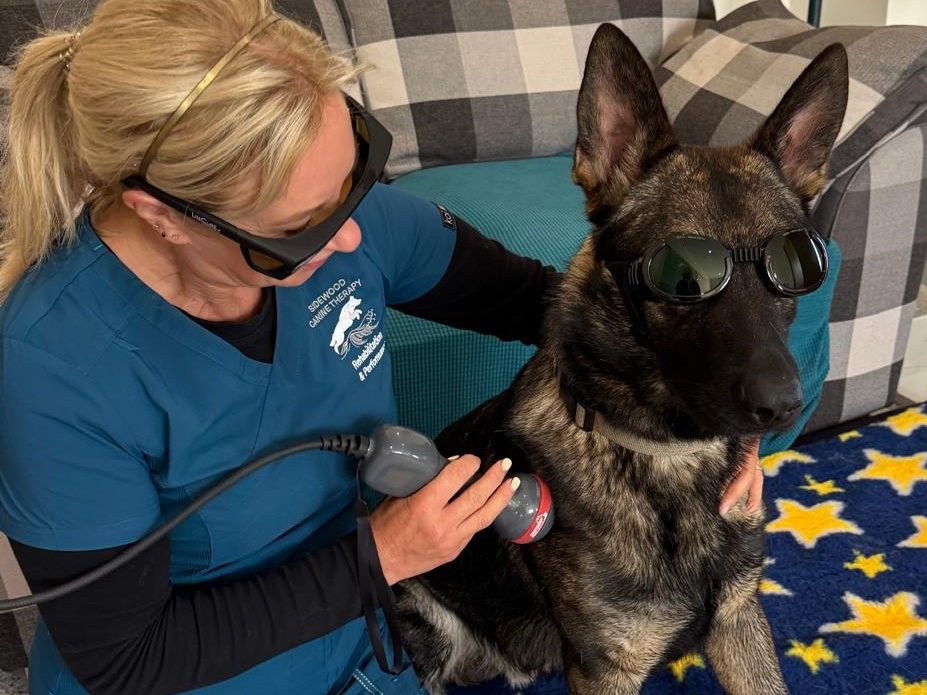
During the session, I will apply the laser to the appropriate area(s) using a handheld applicator. Anyone present within the treatment area (including the patient!) will have to wear protective eyewear while the laser is in use. Treatment times vary depending on the area being targeted and your dog’s individual condition. The average time is 2 to 8 minutes per site. A majority of patients will exhibit an increase in comfort and mobility within 12 to 24 hours after a treatment.
Laser therapy has a cumulative effect, meaning that the benefits are built up over a series of treatments.
The number and frequency of treatments will depend on your dog's condition, treatment goals and their response to therapy. Your individual treatment plan will be discussed with you following your dog's initial assessment.
For some dogs, a course of treatment may involve several sessions during the first few weeks, followed by less frequent maintenance or 'booster' treatments as required. Every dog is different, so there is no one-size-fits-all treatment schedule.
A typical treatment schedule for a dog starting laser therapy may look like this:
- A session every other day for a week (3 in total)
- Two sessions during the second week
- One session in the third week
- Regular booster treatments as required
At Sidewood Canine Therapy, I will tailor the treatment plan to your dog's individual needs and monitor their response throughout their course of therapy.
Your dog's comfort and wellbeing always come first. If you have any questions about what to expect from laser therapy, I'm always happy to chat before your first appointment.
Veterinary Consent
It is a legal requirement in the UK that veterinary permission must be attained prior to Class IV laser therapy being administered under the Veterinary Surgeons Act 1966 and the Exemptions Order 2015. This legislation was put into place to not only inform Best Practice, but to also ensure the ongoing welfare of your dog, preventing harm from treating conditions that may be contraindicated for photobiomodulation therapy.
Owners MUST gain approval from their veterinary surgeon BEFORE their dog can receive laser therapy.
To gain veterinary approval, simply download or print the Veterinary Consent Form below ask your vet to complete and sign.
Conditions That Can Be Treated With Laser Therapy (and there's a lot!)
Laser therapy has been scientifically proven to be successful in treating post-surgical pain and many acute and chronic conditions.
Post-Surgical/Wounds
• Abscesses
• Amputation (post-op)
• Burns
• Cranial cruciate ligament repair (post-op)
• Cystotomy (post or intra-op)
• Declaw (post-op)
• Degloving injury
• Hematoma (post-op)
• Incisional healing
• Orthopedic/Fracture repair (post-op)
• Post-operative pain relief
• Ischemia/reperfusion injury
• Skin graft (post-op)
• Spay/Neuter (post-op)
Musculoskeletal Disorders
• Biceps tendonitis
• Cranial cruciate ligament disease (pain management)
• Elbow dysplasia
• Fracture healing
• Hip dysplasia
• Hypertrophic osteodystrophy
• Iliopsoas injury
• Immune-mediated polyarthritis
• Muscle injury (sprains/strains)
• Myositis
• Osteoarthritis/degenerative joint disease
• Osteochondritis dissecans (pain
management)
• Tendon/ligament injury
Neurological Disorders
• Brachial plexus injury
• Canine cognitive disorder
• Degenerative myelopathy
• Discospondylitis
• Fibrocartilaginous embolism
• Geriatric onset laryngeal paralysis
• Intervertebral disc disease
• Lumbosacral disease
• Meningitis
• Myositis
• Neuropathy
• Paresis/paralysis
• Peripheral nerve injury
Dermatologic Disorders
• Anal sacculitis
• Aural hematoma (post-op)
• Burns
• Demodicosis (pain management)
• Eosinophilic granuloma complex
• Feline acne
• Infections (bacterial and fungal)
• Interdigital cyst
• Juvenile cellulitis
• Lick granuloma
• Mastitis
• Non-inflammatory alopecia
• Otitis
• Perianal fistula
• Pododermatitis
• Pyoderma
• Pyotraumatic dermatitis
• Skin graft (post-op)
• Vasculitis
• Wounds
Thoracic Disorders
• Asthma
• Bronchitis
• Infectious tracheobronchitis
• Laryngeal paralysis (acute distress relief)
• Pneumonia
• Pulmonary fibrosis
• Rhinitis/sinusitis
Urinary Tract Disorders
• Chronic kidney disease
• Cystitis
• Lower urinary tract infection
• Urinary tract obstruction (pain
management)
Dental
• Extractions (pain management)
• Gingivitis
• Indolent ulcers
• Periodontal disease
• Stomatitis
• Tooth root abscess
Abdominal Disorders
• Ileus
• Inflammatory bowel disease
• Pancreatitis
• Peritonitis
Give Your Dog the Benefits of Class IV Laser Therapy
Looking for a non-invasive way to support your dog’s recovery, mobility and wellbeing?
At Sidewood Canine Therapy, our Class IV Laser Therapy (Photobiomodulation) uses therapeutic light energy to support the body’s natural healing processes.
It can be used as part of a rehabilitation programme or as a standalone treatment, helping to support tissue repair, reduce pain and inflammation, and promote recovery.
Laser therapy may be particularly beneficial for dogs recovering from injury or surgery, managing musculoskeletal conditions, experiencing chronic pain, or simply needing additional support with recovery and mobility.
Every dog is different, so treatments are tailored to the individual and can be incorporated alongside Clinical Canine Massage Therapy and/or Hydrotherapy where appropriate.
HOW TO BOOK
WhatsApp: 07833 937097
Email: therapy@sidewoodcanineservices.co.uk
If you're unsure whether laser therapy is right for your dog, give me a call for a chat — I'm always happy to discuss your dog's individual needs and how laser therapy may be able to help.